Author Archives: Kerry Smith

                Future Driving Law Changes.

1.Red X fines on smart Motorway

The RAC released research earlier this year which showed over a fifth of the drivers on smart motorways have driven in a closed off lane marked with an X. Driving in a lane closed by a red X sign is illegal and if caught can result in three points added to your licence, a fixed penalty of up to £100 and even more severe penalties like a court appearance.

In 2017 the government amended the Road Traffic Offenders act to ensure red X offences are caught by automated or remote device, the legislation has yet to be completed.

Highways England has proposed using cameras on motorway gantries to help catching and prosecuting offenders.

2.Pavement parking Ban

To increase safety for pedestrians and to reduce costly damage to walkways and kerbs, since 1974 a pavement parking ban has been in place in London The parliamentary Transport Committee has been looking at issues regarding pavement parking and the committee could recommend new legislation that would see it extended across England. This is likely to take some time to reach conclusion, a blanket ban has been opposed by some. A similar law has been introduced in Scotland banning pavement parking and double parking, this has been introduced into the governments transport bill so a ban may be in force soon.


  1. Mandatory Intelligent Speed Assist for new cars from 2022

One of the mandatory safety features on new cars will be Intelligent Speed Assist under the EU’s revised General Safety Regulation, this aims to increase road safety and reducing collisions. Also, mandatory safety systems will include cameras/sensors for reversing, advanced emergency braking, lane keeping assistance, warnings for driver distraction and drowsiness and a black box to report data for incidents. The Department of Transport has stated the UK will adopt new measures even if the UK does depart from the EU.


4.New legislation to counter rogue parking companies
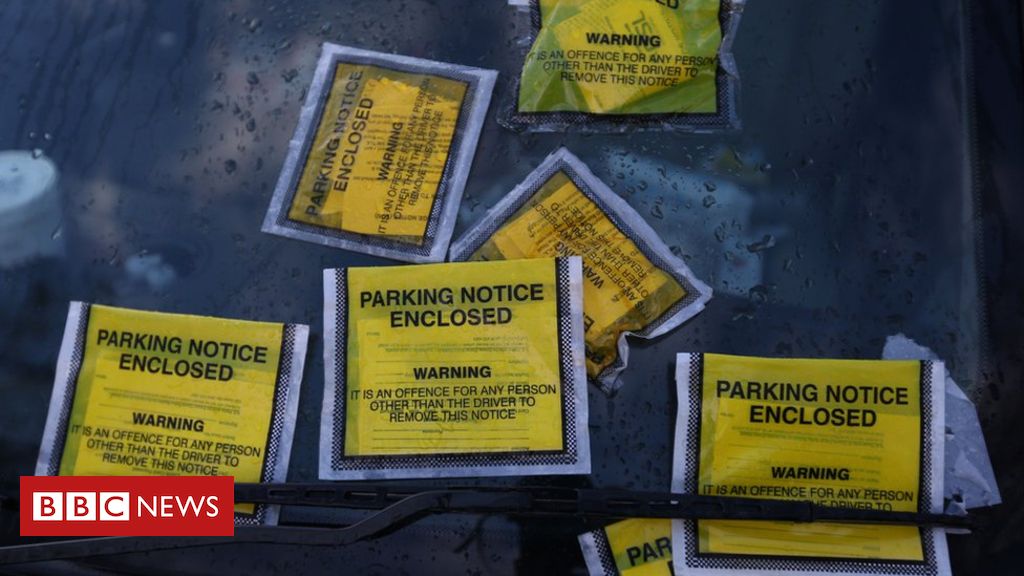
 

Almost 10,000 people have asked the Citizens Advice Bureau for help on parking tickets last year, Complaints included inconsistent practices, substandard signage, confusing appeals process and also demand letters being intimidating, to implement a new code of practise will protect drivers from the unscrupulous parking companies by creating a single independent appeals process and banning certain practices. This new legislation has been passed but is yet to be finalise the new code of practise.


  1. Upcoming government inquiry into road safety

Over the last five years the fall in the number of road traffic collisions have stalled. The https://www.parliament.uk/business/committees/committees-a-z/commons-select/transport-committee/Commons Transport Committee have announced it will conduct and inquiry to examine current approaches, The Government has said it will provide an update as to further plans to improve road safety.
   Motoring changes drivers need to know for 2019

There’s a lot for drivers to keep track of this year, increases in tax,

More ways to fail the MOT, licencing updates and emission zone charges.

Here’s our need to know changes for the year ahead.

Driving and law changes in 2019:

1.London’s Ultra Low Emission Zone

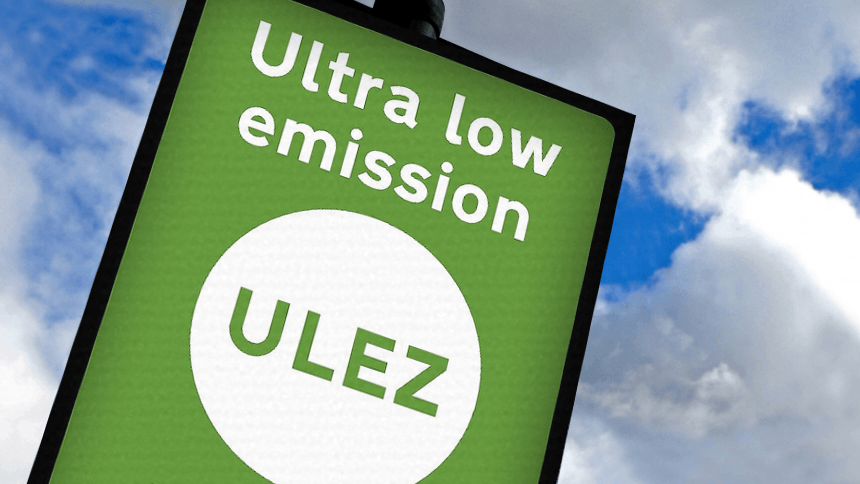
On 8th April 2019, the new Ultra Low Emission Zone (ULEZ) IN London came into effect, this replaces the previous T- charge scheme, with the hopes of improving the air quality and reducing harmful emissions in London.

The new scheme applies to most vehicles, including vans and cars. If a vehicle doesn’t meet the ULEZ emission standards its driver will need to a daily charge to drive within the area. Cars, motorcycles and vans are £12.50 a day and lorries will be £100 a day.

The new charges will apply 24 hours a day, 365 days a year. The ULEZ covers the exact same area as the congestion charge and is in addition to the already in place Congestion Charge. In 2021 the zone will be extended to cover all areas that are within the boundary of the north and south circular.


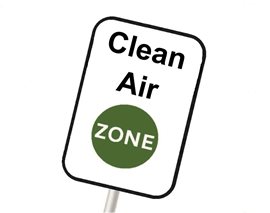
Clean Air zones:

The Environmental Law Organisation Client Earth Issued the UK with a lawsuit for breaching EU LIMITS FOR (NO2) nitrogen dioxide, the government called for other cities to reduce emissions thus creating Clean Air Zones (CAZ).

In January 2020 Leeds and Birmingham are expected to be introducing a CAZ, Bath, Sheffield, Greater Manchester, Oxford and Glasgow are expected to be consulting or implementing similar proposals, it is also possible that after Brexit the UK may change the NO2 limits.


  1. Tax increases

Vehicle Excise Duty (VED) in line with inflation went up in April 2019, These rises apply to all cars not just new model so for most drivers the annual cost of car tax will increase by £5. High emission car owners will be charged an additional £15, diesel owners whose vehicle doesn’t meet the RDE2 standard emissions which is mandatory in 2020, must pay tax at the higher rate. New car owners may face an extra £65 on first year car tax. Fuel duty has been frozen until April 2020 and there are no VED rises due but with the budget in November we will see….

3. New Mot rules

The government changed the rules for MOT tests in May 2018. New regulations include:

. Exemption for cars over 40 years old

. A new certificate design

. New items being tested, headlight washers, reversing lights, fluid leaks, brake pad warning lights and tyre inflation.

. New defect categories : dangerous, major, minor, advisory and pass.

. Stricter limits for emissions from diesel cars with a diesel particulate filter  (DPF)

4.Diesel surcharges for residential parking

According Car buyer the price of residential parking permits can be a postcode lottery .Some London councils have been quietly been introducing an annual diesel surcharge with the London Borough of Barnet charging up to £10 more and the London Borough of Merton a whopping £150 !


Driving test pass rate is at its lowest for a decade due to harder theory questions – can you get them, right?

Only 47% of learner drivers are passing the practical exam due to changes in the theory test. Passes are at a ten-year low because theory questions have become tough to get correct.

Over the past year only 47% of learner drivers passed the theory test a fall of a quarter in ten years. Eight sample questions were given to 2,800 drivers to test how difficult the new tests were and only 11% got them all correct.

The theory test- which was introduced in 1997 has had more multiple-choice questions added, to stop pupils memorising the questions and answers they have stopped them being shown online.

Statistics according to The Department for Transport show that women have a higher pass rate then men. To test the knowledge of driving conditions, which includes extreme weather conditions i.e. snow and sleet were added (Hazard Perception).

Example Theory Questions


  1. Following a car collision, someone has suffered a burn. The burn needs to be cooled. Given that one of the below is correct, what’s the shortest time it should be cooled for?
  2. a) 5 minutes b) 10 minutes c) 15 minutes d) 20 minutes
  3. You’ve just passed your motor practical test. You don’t hold a full licence in another category. Within two years you get six penalty points on your licence. Given that one of the below is correct, what will you have to do?
  4. a) Retake only theory test b) Retake theory and practical tests c) Retake only practical test d) Reapply for full licence immediately
  5. Given that one of the below is correct, what colour are the reflective studs between a motorway and its slip road?
  6. a) Amber b) White c) Green d) Red 4. You wish to tow a trailer.
  7. Given that one of the below is correct, where would you find the maximum nose weight allowed on your vehicle’s tow hitch?
  8. a) In the vehicle handbook b) In the Highway Code c) In your vehicle registration certification d) In your licence documents
  9. Given that one of the below is correct, when are anti-lock brakes (ABS) most effective?
  10. a) When you keep pumping the foot brake to prevent skidding b) When you brake normally but grip the steering wheel tightly c) When you brake firmly and promptly until you’ve stopped d) When you apply the handbrake to reduce the stopping distance
  11. Given that one of the below is correct, what does the law require you to keep in good condition?
  12. a) Gears b) Transmission c) Door locks d) Seat belts
  13. You’re driving on an open road in dry weather. Given that one of the below is correct, what should the distance be between you and the vehicle in front?
  14. a) A two-second time gap b) One car length c) Two metres (6ft 6in) d) Two car lengths

The answers are at the bottom of this article

Moneysupermarket the price comparison website run a study which showed that four out of ten drivers were confident enough to pass the theory test if retaken. A third of drivers were able to identify correctly the reflective studs between the motorway and slip road as being green.

Learner drivers have to pass the theory test before they can take their practical driving test,they are asked 50 multiple choice questions and to pass must answer 43 correctly, to pass the hazard perception part they are required to answer 44 correctly out of 75 after watching clips to spot road dangers.

The Department of Transport have reported 1.34million learners took the theory test in the last year with 47.4% passing, this is the lowest percentage since 2007-2008 when figures were first published and down 48.7% in 2017-18.The pass rate in 2007-2008 was 65.4% which dropped in 2013-14 when new theory questions stopped being published online.

Answer: 1=b, 2=b, 3=c, 4=a, 5=c,6=d, 7=a

For help with practicing the hazard perception or theory questions why not use our sample papers on our website or book in with one of our trainers for one to one theory training at our head office.


Looking for a new career?


Becoming a driving instructor is a very rewarding choice of career- It gives you the freedom to be your own boss, working times and days to suit your life, it also helps you become an important figure in the lives of inexperienced drivers, helping them to gain their independence on our roads. At Britannia we all remember our first driving instructors!

Here at Britannia Driving School we continually work hard to introduce new pupils to all our driving instructors, we give them the edge over the competition. We are different to other driving schools as most of Britannia’s income is spent on the following.


MARKETING: Google, Yellow pages, car livery, internet sites, direct marketing, Offering freephone lines for both landlines and mobile phones, and of course mostly by personal recommendation!

BRITANNIA’S WEBSITE: Our website is a field leader, attracting over 2 million users annually. Major keywords like “driving schools” will take you to a list of search results on search engines and Britannia Driving School will appear at the top from around 153 million driving school results.

BRITANNIA DRIVING SCHOOL OFFICE: Our office is open five days a week to driving instructors and the public. The Britannia telesales staff are highly trained and very motivated, their selling skills will keep you topped up with pupils all year round.

INTERNET DIARY: Pupils are given allocation to instructors according to postal codes and diary requirements and added to our bespoke internet diary. We have a message board to help instructors communicate directly with the office team and vice versa, the diary can be updated and reached by smart phone or computer alike globally.

PRE-PAYMENT: Unlike other schools Britannia has a pre-payment system which eliminates last minute cancellations by pupils.

SUPPORT: Help and advice is always readily available in the office for face to face advice or a phone call away, whether you need help with teaching, book keeping or accounts.

WHY CHOOSE BRITANNIA DRIVING SCHOOL?

Britannia will provide instant access to large marketing base, as well as a largely beneficial association with one of the most trusted brands in driving tuition in Great London. Our brand name attracts substantial number of quality pupils, which helps instructors to minimise cancellations and retain pupils.

INTERESTED: Why Not give our friendly office staff a call, chat online or send an email you will be invited for a non-obligation friendly chat and a coffee, all your questions will be answered and you will be assessed on your suitability to becoming a driving instructor.

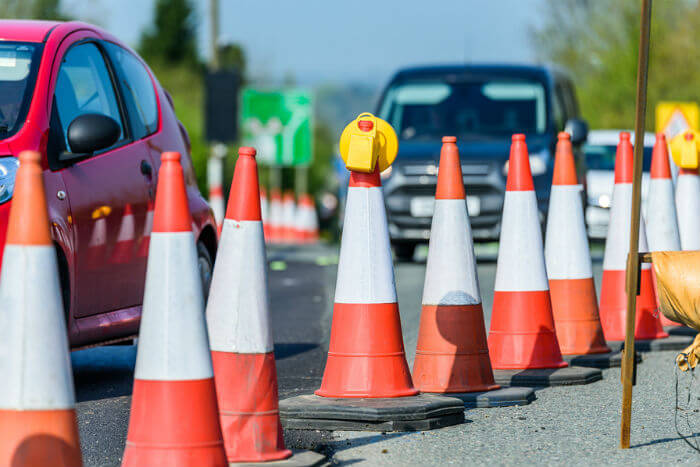
Good News! Road Works to be Suspended

The Highways England has made a promise to suspend 400 miles of roadworks for the Easter Weekend. Approximately 459 miles of existing roadworks will be cleared away for between Thursday 18th April at 6am and 12.01 Tuesday 23rd April, this means 99% of England’s main roads and Motorways will be free of roadworks over the Easter bank holiday weekend.

The Highways England’s traffic Officers will still be on hand to help motorists who unfortunately are involved in an accident or have broken down, the officers are in black and yellow batten burg marked vehicles.

Advice issued by the organisation are to take the time for basic checks on your vehicle, this will help yourself and other road users avoiding a cause of issues for traffic for the weekend.

These following checks will help to avoid unnecessary breakdowns

Check your fuel, tyre pressure and condition, windscreen fluid, lights and the engine oil.

Familiarise yourself with motorway signs, the overhead gantries will display a large red X if for any reason a lane is needed to be closed.

Remember driving in a lane showing a red X is not only dangerous but illegal, It not only carries up to a £100 penalty charge but also 3 points on your license.

Also, the Highways England have also recommended that people towing caravans or trailers have the correct licenses and equipment and are correctly connected and with the relevant insurance.

Highways England’s customer service director Melanie Clarke said: “We’re doing everything we can to make journeys as smooth as possible this Easter and that’s why we’re keeping around 99 per cent of the road network we manage free from roadworks,” she said. “Safety is our top priority and we know from experience that almost half of breakdowns can easily be avoided if motorists carry out simple vehicle checks before setting off over this period.”

Simon Bush of Britannia Instructor Training College said: “The Highway Department is doing all it can to ensure the roads run as smoothly as possible, it’s our duty to help them by keeping congestion to a minimum.”

Happy and safe Easter Driving from all at Britannia Driving School!

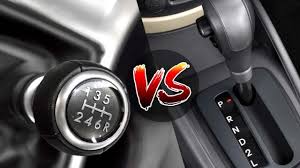
Automatic Vs Manual Transmission???

Automatic Vs Manual Transmission???

Before embarking on driving lessons your first decision will be whether to learn in a manual or automatic car.

Its often thought its an easier option to learn in an automatic because there is no clutch or gears. But you must remember that you still will have all the other factors in learning how to drive in an automatic.

There has always been a great debate as to whether learning is easier in a manual or automatic car, some say manual is the only way and others stick by automatic.

Automatics have become more sophisticated and economical in recent years, as this has always put drivers off as they consumed more fuel and were more expensive to buy.

Advantages of driving a manual

Passing in a manual car entitles you to drive manual or automatic, if you wish to change to an automatic car then you can, however this only works one way as passing in an automatic you can only drive automatic and must retake tour practical test in a manual car should you wish to change transmission.

Manual cars use less fuel – when driven properly. A driver in full control of their manual car will know when to change gears as so to avoid the engine over revving and wasting fuel. It is recommended to change gear about 2000rpm in a Diesel, and 2500rpm in a petrol car.

Manual cars will help you staying more alert especially when taking driving lessons, there is so much more for you to focus on when driving a manual as you have the changing of the gears and clutch control to think about.

Advantages of driving an automatic transmission car

Most pupils that learn in an automatic will learn faster than those learning in a manual, they will have less to learn with no changing gears, biting point or clutch control to learn.

Automatics are generally the easiest to pass in, the pass rate is higher for automatic tests, due to having fewer attributes to meet in terms of clutch control and gear changes, so less chances to fail.

The most persuasive point as to learning in an automatic is its easier.

No gears, no bite point, no clutch control or the embarrassing situation of stalling as an automatic does all this for you, this can leave the driver more time to concentrate on the road.

The argument of manual or automatic will probably carry on, here at Britannia Driving School we have noticed a massive change in more and more pupils choosing to learn in an automatic it has really become popular.

Still unsure which to choose? Why not give Kerry a call take a driving lesson on either and go from there.

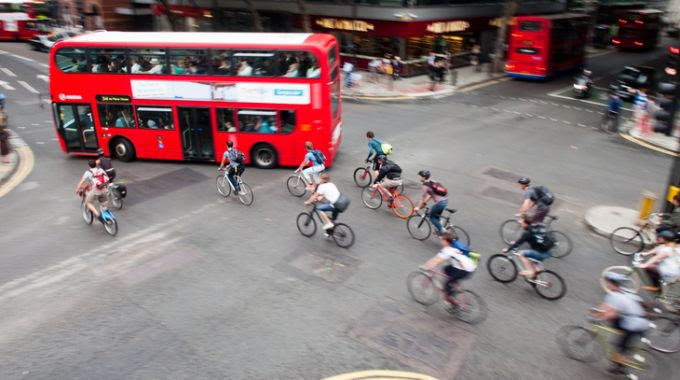
   Do Cyclists have the same rights as car drivers?


Cyclist & Vehicles - Do they have the same rights?

Cyclist & Vehicles – Do they have the same rights?

We are all battling for space on very busy roads daily, one of the biggest grudges seems to be cyclist’s vs car drivers. Drivers of cars think there is no reason for push bikes to be on the road, whilst bicycle riders claim they aren’t given enough room by drivers.

So, here’s a few things which are legal and what isn’t on a bike.

Riding Side By Side

In the Highway code there is no law which stops riders cycling two or more abreast, it’s just an advisory.

The way the Highway Code is worded is a bit confusing, a legal requirement

For a rule saying ‘must’ or ‘must not’ will be backed by a legislation and breaching it would be a criminal act.

An advisory will simply say ‘should’ or ‘should not’ or ‘do’ or ‘do not’, which will be best practice behaviour and there are no implications legally if you break this rule.

Rule 66 in the Highway Code states ‘You should’ but then ‘never ride two or more abreast’. This confuses the reader as the advisory sounds like a legally backed rule.

Also rule 66 states that cyclists should ‘ride in single file on narrow, busy roads or when riding around bends’ That again is just an advisory.

Riding in the middle of the road

Once again, another confusing rule from the Highway Code that can be misunderstood is its not illegal to cycle in the middle of the road.

The rule 169 says all road users should not ‘hold up a long queue of traffic’ and should ‘if necessary, pull in where safe and let traffic pass’. Its mostly directed at large and slow-moving vehicles which can be hard to pass.

The Primary Position, or better known as cycling in the middle of the road can be the safest way to ride, when there are parked cars to the left hand side of the road it just takes a inattentive driver to open his car door without checking for cyclists and could easily knock them off the bike. Cyclists are also much

more visible riding in the middle and it’s also the recommended way to stop cars overtaking you.

Riding outside the cycle lane.

Depending ‘on experience and skills’ riding in a cycle lane can make your journey safer as explained in rule 63 in the High way code.

Jumping red lights

The biggest bugbear of car drivers v cyclists is jumping red lights! This is illegal to cross a stop line when the lights are red for cyclists and car drivers alike and carry a fixed penalty notice of £50. This also applies if a cyclist rides across a cycle only signal crossing when the green light isn’t being shown. Cyclists have the same rights as car drivers, we need to use the road space we have respectfully, courteously and most of all safely. Our instructor Jerry in Shepherds Bush and Hammersmith said:” It would seem both sides are equally to blame which leads to heated arguments on the road. We mustn’t forget we are all human and should have more consideration no matter what mode of transport we use”.


Safe Driving From Britannia!


Tips on finding a Driving Instructor

Recommendation is a good place to look for an instructor or driving school. If someone you know suggests an instructor, ask them how reliable and professional they were.

You can also search online, most reputable driving schools will have a review section on their website from former students and maybe photographs of recent pupil passes.

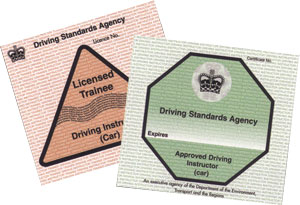
Instructors will not be so easy to evaluate, do your homework! All instructors in the UK by law must be licensed by the DVSA (Driving and Vehicle standards Agency).

Also, instructors must undertake a DBS check (Disclosure and Barring Service) this is to make sure they are safe to work with teenagers.

Prices will vary from Driving School to driving School, make sure you find out the prices before you embark on lessons, you may be having lessons for quite a while.The majority of driving Schools and instructors offer your first lesson at a discounted rate, ask about discounted lessons if you pre – pay in A bulk of ten or twelve.

The top complaint about  driving instructor’s is paying in advance, receipts Should be given for all payments, ensure you are fully aware of discounts, deals and the cancellation policy.

Learning to drive can be an unnerving experience for some and this can be exaggerated when you have chosen the wrong instructor. Don’t be afraid to look for the perfect instructor who can help and guide you to the success of gaining not only your full driving licence but safe driving for life!

Safe driving, from Britannia!